This was our first week in production, and my partner and I had to prepare our actors, we needed to choose actors who fit the stereotype of our characters. After asking friends volunteer we had finally got our characters on the go! We planned the essential props that would be considered and had to bear in mind the stereotypes of teenagers.
My partner and I chose actors who fit the ‘cultural theory.’ Cultural theory is an integral part of human existence (ref. wikipedia, cultural theory) this means that humans act according to their environment, we are socialised to behave in a certain way, and this leads to a culture. However the media interprets the culture in a way that creates an archetype of the culture. For instance, the working-class or lad’s culture is seen as deviant and rebellious, sociologist such as Albert Cohen, observed that lads create sub-cultures, a culture that stems away from mainstream cultures. Lads create cub-cultures because they feel that the middle-class culture alienates them, they are culturally deprived. The typical stereotype of ‘lads’ would be underclass white males or black males, who fit the stereotype by their appearance, accent and actions.
Although in my storyline, my main focus is on a middle-class white female, she fits the hyper-reality theory be Jean Baudrillard, the view that the media presents the middle-class living in a ‘fantasy’ ‘inspirational’ lifestyle. The media text such as ‘The Hills’ as analysed before, portrays middle-class white females in a rich, glamorous and in a wealthy state. However I challenged this popular convention with the media industry with my storyline. I showed that middle-class white females do not live a life of luxury; circumstances can make anyone turn to crime regardless of your social class. We question, how does the media text enable the audience to view the characters or situation in this manner? According to Stuart Hall, the media industry encodes a text and the audience decodes the text. The encoding is created through connotations and denotations, mise-en-scene, the type of character created, the light and camera angle. The composition of the media text influences how the audience decodes the text.
The audience can either be negotiable, meaning that they decide how they view the media text, the audience can be passive- they accept the message that the product is trying to convey or the audience can be oppositional- they reject the message that the product is conveying. Film trailers such as ‘bullet boy’ is centred on crime amongst the black community, the trailer composition makes the audience negotiable, this is because they centralise their clips on crime and the urban lifestyle, the main characters are black however each viewer have their own viewpoint on the case. Some audience might see the trailer (bullet boy) as exaggerating the crime rate in the black community, some people who are not aware of how the urban lifestyle is would be passive towards the trailer, believing that the urban-state of living is violent, troublesome and dangerous and filled with ‘working-class’ individuals. In my trailer, I am hoping to challenge this conception; by displaying that crime does not emerge only from working-class crime is an act that can be committed by anyone.
 After bearing in mind, the theories surrounding moving images and cultures, I decided to progress in choosing my characters. I wanted characters that portray this stereotype based around media conventions. It is evident that young black males are used as criminals in films, although I am challenging media conventions, I am also following some common stereotypes in order to portray my point. On the left hand side are images of people that I am planning to use for my teaser trailer.
we linked our planned main character to other important characters, the red arrow indicates the cause of effect to our main character (Tara behavior) whilst the black arrow indicates the manipulators of the effect caused.
Brief on the Camera
Using a canon camcorder XM2 that I rented from my college premises, my partner and I decided to do most of our recording at the weekend because our characters were accessible and this time.
Canon XM2
The camera used contained 470k pixels, which meant that the moving images would be well defined. Enabling us to capture good quality images; as opposed to mobile phones, which can only handle the standard 3.2 pixels. I found that most films or teaser trailers use Red camera, this camera is for professional use only and has a high price tag attached to it, the pixels are 28,000!! (Sourced: wikipedia, ‘Red Digital Cinema Camera Company’) This is a giant compared to my bog-standard canon camcorder. However since I am just an amateur I know that I would face problems using the camera that I was provided with.
The canon camera has a 20x optical zoom, the zoom is very important for my filming because I would need it to do close-up shots and mid-shots. I would also need it for the mise-en-scene and for the frame of the settings.
The camcorder also came with a direct accurate stereo microphone built-in with the camcorder; this was effective, as we would be using this for dialogues, monologues, ambience and sound effects. The camcorder can be recorded using a cassette or a memory card, for our project we used a cassette because it was easier to import the text to my college’s computer.
 |
Figure 1Canon XM2 I disclaim any ownership on this picture of the camcorder Canon XM2 |
We then progressed to film for our teaser trailer. Our first scene was the mother and daughter scene, we went to my characters house to shoot our first scene. We set up the required atmosphere and ambience. Our aim was create a ‘homely’ yet daunting to feel. This scene is where our main character finds her mother dead, in the kitchen. Since it is a film trailer we did not need the whole story of her entering the house, we needed only shots. Short shots to establish a story, my partner and I tried to keep our mind frame on the shots we needed and not to get carried away with trying to produce a film. We constantly had to reassure ourself that it was only a teaser trailer and not a 5 minute film. We referred back to our plans several of times so we can capture the exact shots that were originally planned out.
The love and death scene
 Objective shot
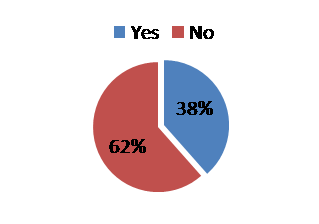
Affection shot between our main character (damsel in distress later on) and the cause of her distress. The equilibrium theory applies to our teaser trailer. In the beginning we see two characters display affection to each other. The audience can automatically read that this is a mother-daughter relationship, agape love. 100% of the people i asked stated that the shot showed a loving relationship between a mother and daughter.
The audience can clearly identify the two characters visually, even if the name is not stated. Kissing on the forehead is the most obvious sign for love and care, we made this our first shot to show a balance of equilibrium.

A side shot,:

A shot of hand speaks a thousand words, whose hand? what does it represent? is what we want our consumers to think about. The lack of identity would just heighten our teaser trailer. We found during our research that existing media products failed to create suspense for crime genre especially for teenagers .i.e Kitdulthood went straight into the crime area, they failed to show how and why their characters behaved like this in the first place. fruits surrounding the hand allows the reader to be active, they would interpret the meaning according to the context that it is placed. Theory formed by Aschwtz, readers interpret the context of meanings, the hand with fruits surrounding it can interpret an accident, robbery, murder, attack etc...

Character dropping the keys, a switch from the unidentified character to Tara, she is wearing the same clothes as her first shot so the audience can still identify her, there is no confusion into who this character is because it has been established in the first shot. There is an action match with the previous shot as we only captured the hands. Here, we symbolized hands, our hands helps us do things, it lacks identity because almost every hands is similar however it does hold important DNA.
Showing Tara drop the keys is a profane action, however the audience have figured it out that she would meet something terrifying. Building up tension by not allowing Tara to identify the body lures the audience into consuming the clip more. Tara wearing black connotes the typical clothing of youths but also makes her stand-out from the background.

A high shot of Tara, at this point there is a dialogue. During my research, I found that dialogues are not consistent in teaser trailers as it would be in films. What teaser trailers focus on is sfx and backing sounds-minimal dialogue can create an effect. In this shot Tara has called for her mum. The audience being quite active can calculate that the hand might be that of her mums-however we can't be so sure...
the high angle shot was to represent the direction that Tara was facing, the consumers can establish that Tara was calling from upstairs.
The high angle shot also represent the feeling of littleness, the audience is somewhat looking down at Tara because they have figured something that she is about to discover.

A shot of an older woman, looking directly at the camera, neck twisted, blood falling down the side of her mouth. The impact of a dead person looking at the camera creates an expressive reaction towards our target audience. identified in the beginning as Tara mum, majority of the audience would feel a automatic sympathy for her. lying down sprawled on the floor creates a realistic image of a dead person. At this point, it is not clear to the audience if Tara has seen her mother yet but they know that she will eventually.
Showing pieces of Tara mum in the beginning heightens the dramatic effects that we tried to convey the audience can now note that this is tara mum because of the shot displayed in the beginning of the trailer.

In this shot it is clear to see that Tara as not seen the dead body, we shot a low angle of her foot, again to heighten the atmosphere which is changing dramatically. Wearing the same clothing as before helps the audience identify that this is the main character. It is also clear that there are only two people in the house-hold and no-one else.
Shots of her foot shows her walking towards her fate, walking towards something that she thought he would never see, just as we showed pieces of the mums dead body, it is the same as showing pieces of Tara. This is because the two characters have not meet it each other so its like a mystery for the characters to see the reactions that would take place- reaction mainly from Tara obviously.


This shot shows that it is clear that Tara has identified the body, we did not switch to the mother so it breaks the pattern that was been constructed before. The reason being is because the audience at this point would have actively constructed the mystery. We cut to Tara seeing the body because she backs off and her facial expression becomes terrified. The consumer sense fear and a change of atmosphere dramatically.
We then cut to the body of the mums, now we can see what has killed her and from here the audience can interpret that this was in fact murder. The fruits on the floor and position of the knife shows that there was a scuffle before the mother got stabbed. From the small shots and little props the audience can convey a story of what happened. There is no scirpts but as researched, teaser trailers focuses mainly on images to tell a story.

A short of Tara sliding down symbolizes her word collapsing before here, and her physical body which is unable to take in what has happened. The shot of Tara coming in and asking for her mother shows that she is innocent in this crime and has not part-taken in the crime at all. The red behind her follows the theme of crime which becomes part of her life, the fact that it is behind Tara symbolizes the route of life she decides to take. Crime and Lust.
At this point, i had a clear idea of what title graphics i would be using and what music i would use but i decided to put my ideas on hold until i have researched into the components that make up a successful teaser trailer.